Română
Oroiael - Astrology Platform
A free site with instruments for five symbolic systems: Vedic astrology, Human Design, Matrix of Destiny, Tarot and Soul Arc, a system I made myself. I designed it and built the engines behind the charts. Everything runs in the visitor's browser, with no accounts and no outside APIs.
VISIT THE LIVE SITE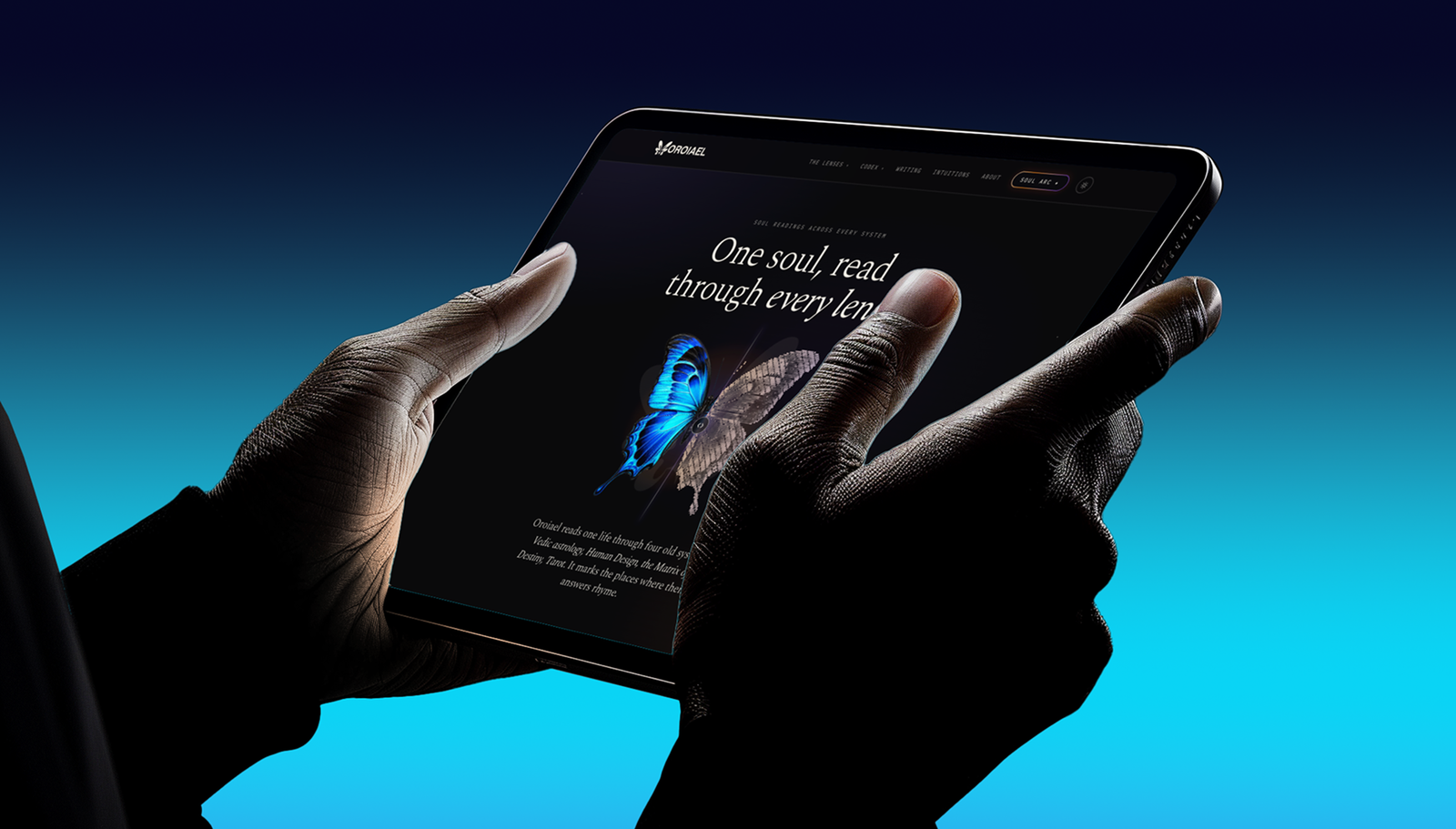
The practice runs on ten open tabs
People who work across these systems keep one site for the Vedic chart, another for Human Design, another for the Matrix, plus screenshots to hold it together. When two sites give different answers, nothing tells them which one is right.
One site that does its own math
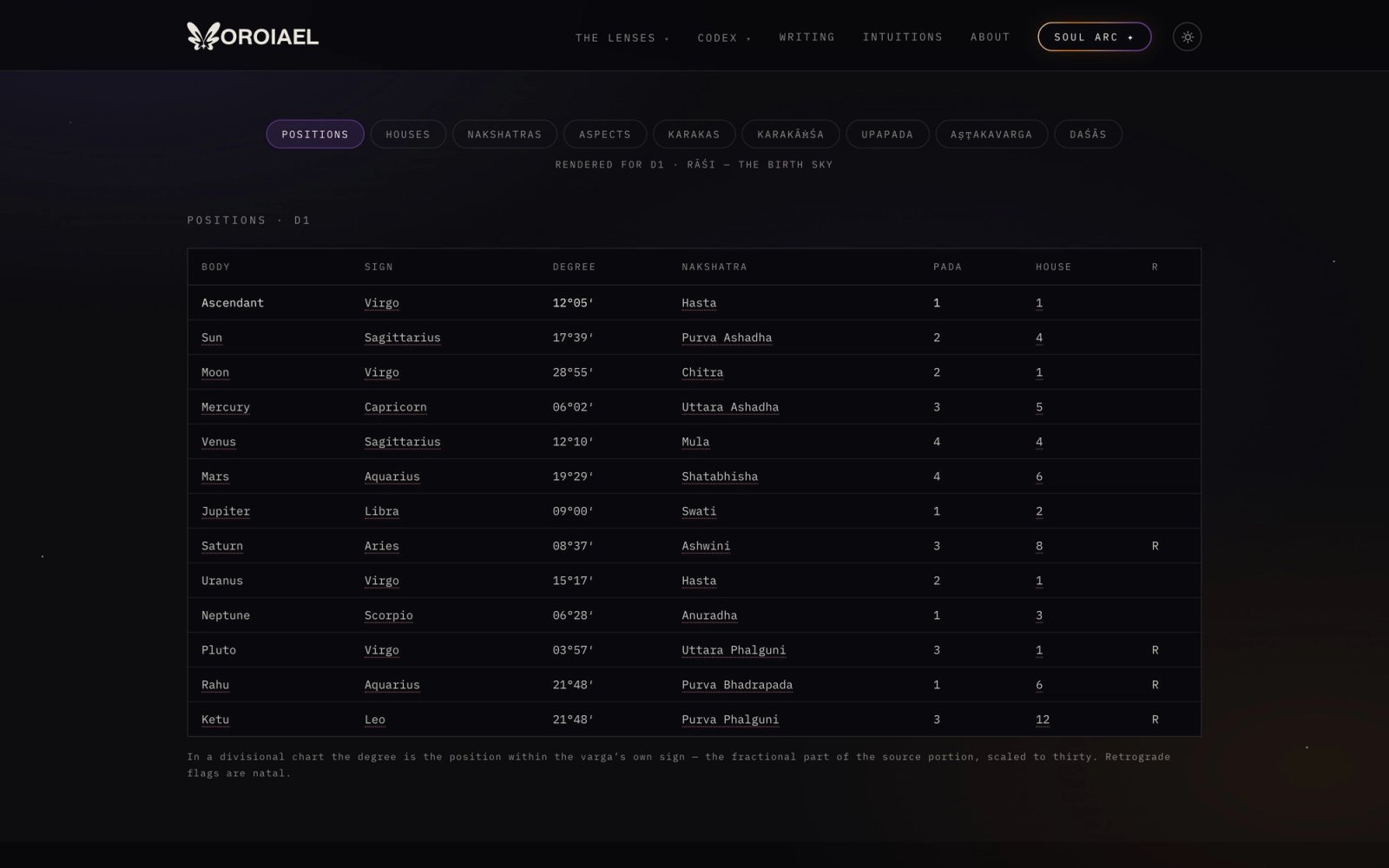
Planetary positions come from Astronomy Engine, an open-source library. Everything above them I built from each system's classical rules: 11 Vedic divisional charts, the Human Design bodygraph, the Matrix octagram, a 78-card tarot reader, then Soul Arc on top. Each chart computes in the browser and draws itself as SVG, ready to export as PNG or PDF.
Research & Definition
- 01Read each system's classical rules and wrote them down as specifications I could test.
- 02Set astro-seek as the depth to match and collected reference charts to test against.
- 03Started with the Matrix, which needs only arithmetic on a date, then moved to Human Design, Vedic and Tarot.
- 04Compared results position by position and fixed what didn't match.
- 05Drew each diagram as data-driven SVG under one set of design tokens.
- 06Built Soul Arc last, on top of the finished engines.
Headlines and reading text, in the light and regular weights.
Labels, buttons and the lettering inside the charts.
Eleven charts from one moment of birth
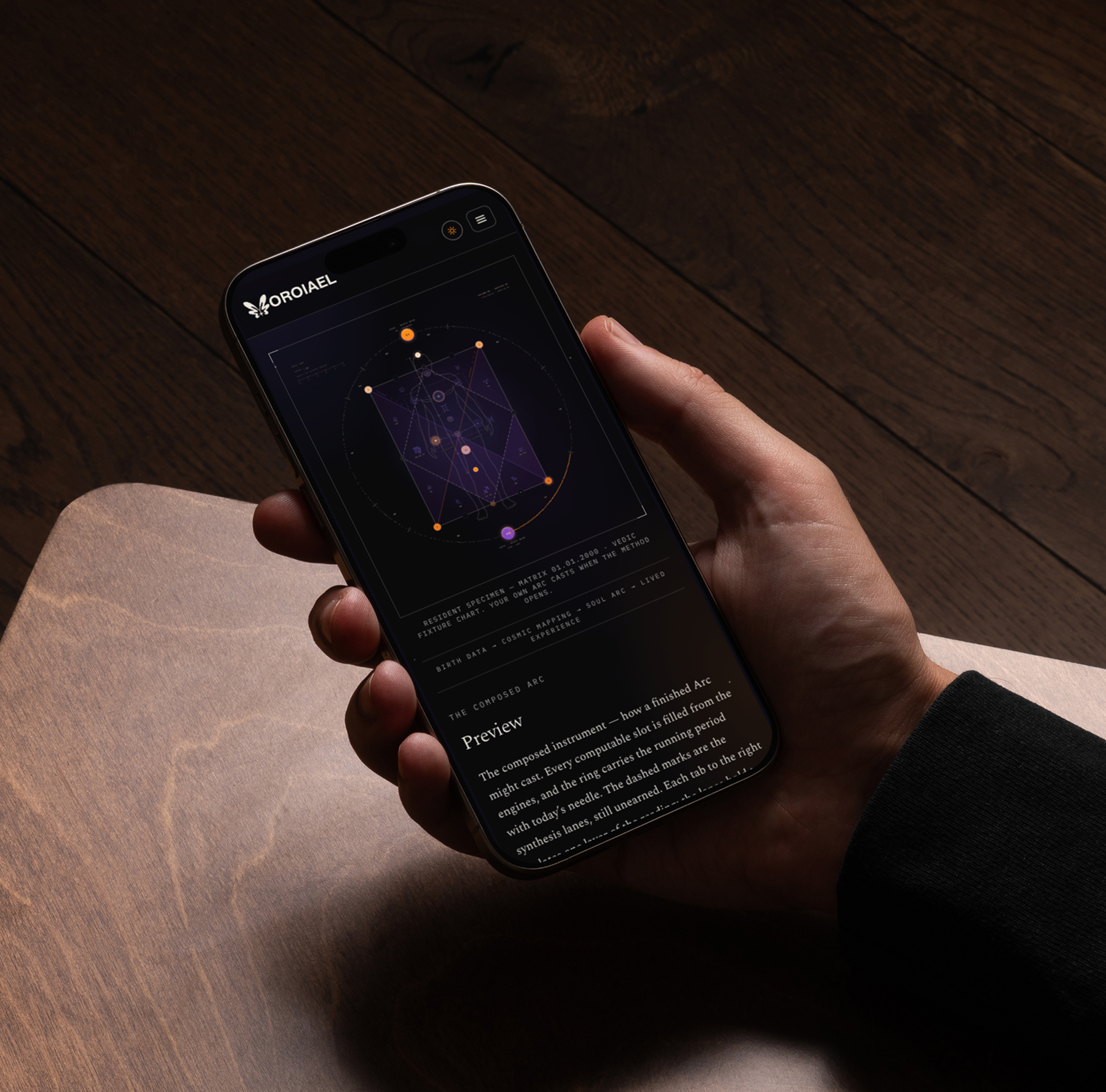
Each system has a diagram people already recognize: the Vedic square, the bodygraph, the octagram. I fixed the geometry in code and let the computed values drop into it, so the picture and the numbers come from the same source. Moving from D1 to D60 redraws the chart in place, and the values on a chart open their entries in the 474-page Codex.
Accuracy you can check
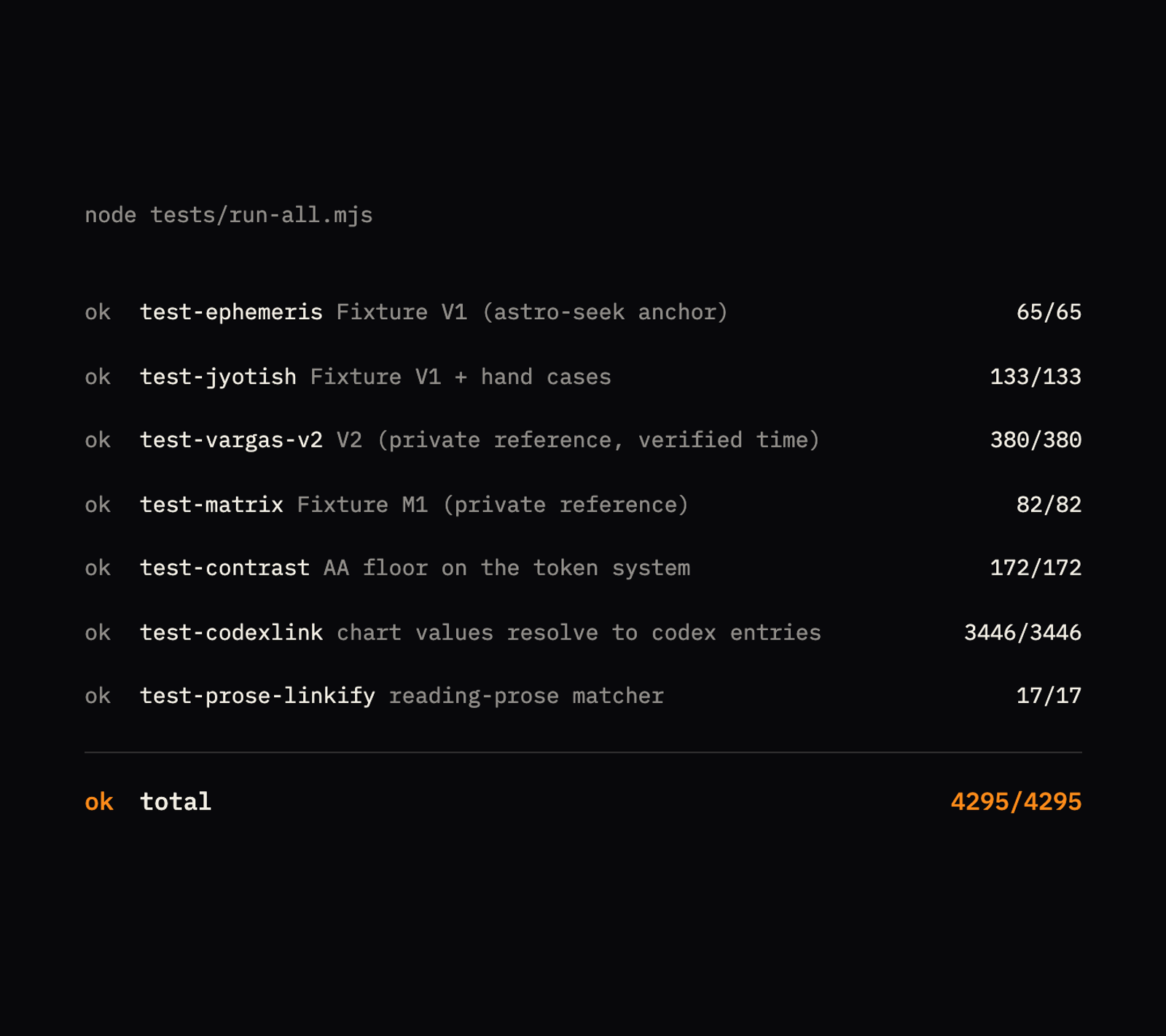
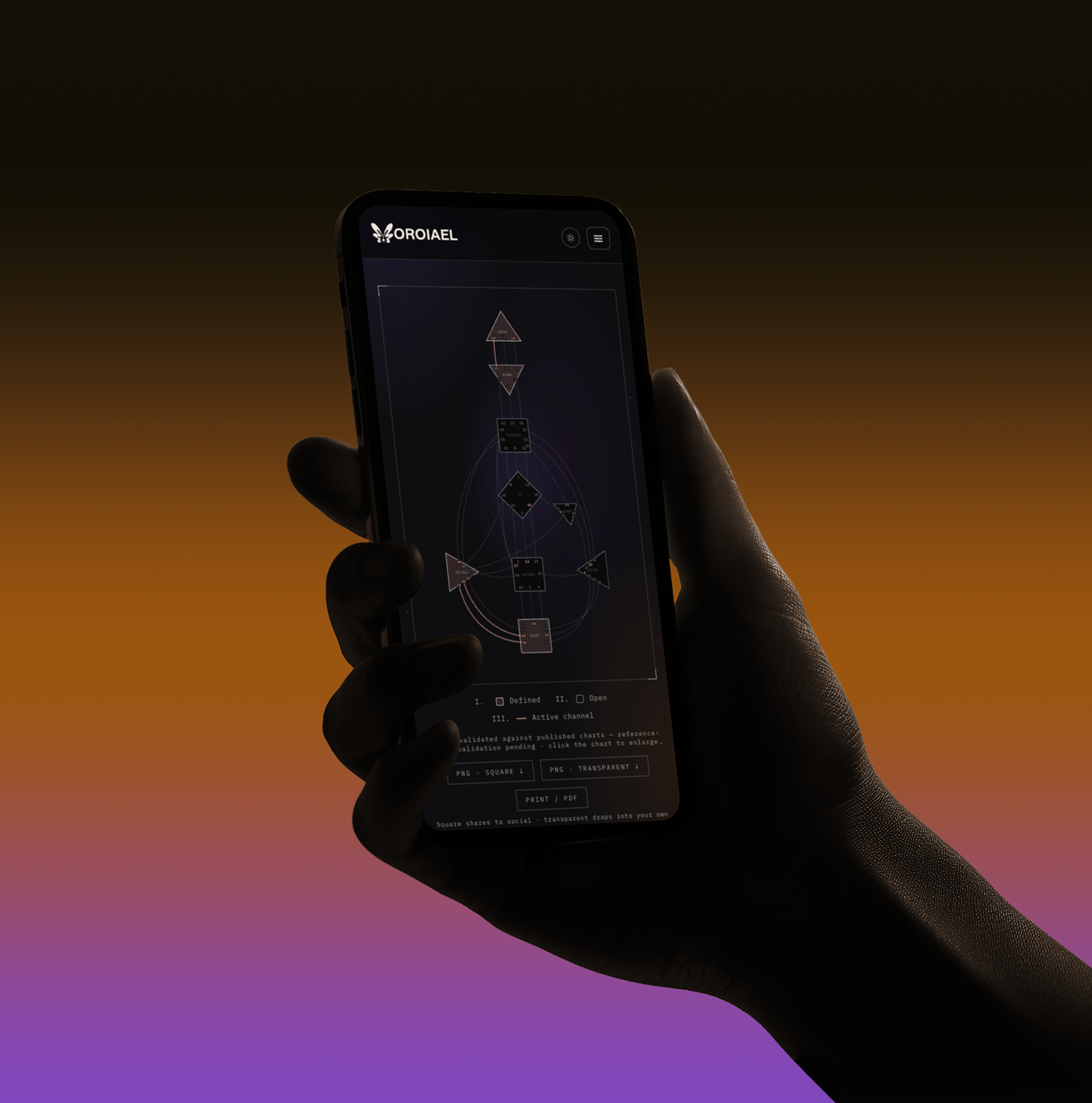
The Vedic and Matrix engines match their reference charts position by position, with planetary positions within 0.66 arcminutes of astro-seek. Human Design is checked against published charts, with reference-grade validation still to come, and its page says so. The full suite runs 4,295 checks: 660 on the math, 172 on color contrast and 3,446 that follow chart values to their Codex entries.
Every chart lives in its own link
Birth details are personal, so a chart belongs to whoever casts it. Charts compute in the browser and each one lives in its own link, ready to save or share. There's no account to make and no database behind it: the whole site is static files on Cloudflare, and city search runs in the browser from one file per letter.

Iteration & Refinement
I threw out the first full site
Claude Design generated all 22 pages in one go. It looked finished, and it wasn't mine: the palette drifted from page to page, the logo shrank, and the charts came out as thin wireframes. I moved the design into code, locked color and type in one place, and rebuilt the visuals from public-domain plates under one coded treatment.
I passed on the standard astronomy library
Swiss Ephemeris is the gold standard for planetary positions, and it's free only for open-source projects. I used Astronomy Engine under an MIT license and measured the difference: 0.66 arcminutes at worst, well inside the 2-arcminute limit I'd set.