
 Română
Design notes and
research essays.
Research essays on design, cognition, AI and how systems hold together, alongside shorter practical notes.
The Next Default: Why Every Anti-AI Design Rule Becomes a Style
One viral checklist lists the tells of AI-built websites; another video says creators answer AI sameness with deliberately ugly fonts. I traced both. The AI look comes from a handful of tool defaults the AI companies recommended, and the anti-slop rules they wrote to escape it seeded a second set of tells within months. I keep a list of design rules of my own, and the research says what happens to lists like mine.
Receipts That Don't Hold: What AI Search Really Cites
A short reel about the sources AI assistants cite moves through a chain of striking numbers and ends with simple advice: click the link and check that your answer is on the page. I followed every number back to its study. All of them are real, and most were widened in the retelling, which is the same thing that happens between a web page and an AI answer. The advice is the best-supported claim in the reel.
Soft Fascination: What Attention Restoration Theory Says About the Feed
A short video says your attention is depleted, that passive rest cannot restore it, and that every traditional culture knew the cure. I checked it against the Kaplans' own texts and the experiments since. The video contradicts the theory it cites, the lab evidence is modest, and several of its traditions are modern inventions. What survives is a vocabulary, written in 1995, that describes a feed more precisely than most of what has been written about feeds since.
The Rationale Slide: Describe the Mark, Leave the Meaning Open
Two videos I saved weeks apart give opposite advice: one says, after Jung, that explaining a symbol kills it; the other says taste you cannot articulate is useless. Read against the psychology of verbal judgment and against Jung in the original, they turn out to be talking about different kinds of words. Describing what is there helps. Improvising reasons and decoding meaning are where the damage happens, and the slide that explains a logo does both.
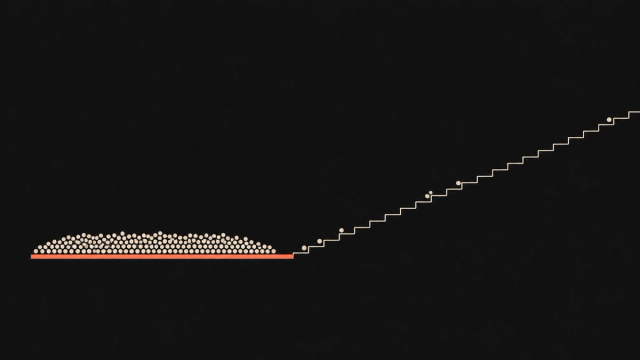
Designing the Slope: The Default Is Still the Product
A short video argues that the future of interfaces is software you can modify yourself, by command, from inside the app. The wish is fifty years old, and the research on who actually modifies software is clear about one thing: most people live in the default, a few tinkerers change things for everyone else, and the changes people use most are a handful of global dials. If AI makes everyone able to change the interface, the designer's work moves from the screen to the slope.
The Brush Group: Why the Brain Science of Inspiration Favors Making
A popular science video lists what happens in your brain when you look at creative work. I read the studies behind each claim. Every one exists, and almost every one is stretched by a single step, always in the same direction: credit that belongs to making gets moved onto looking. The best-supported result in the video belongs to a group of retirees who spent ten weeks learning to paint.
The Margin of Crudeness: Ornament After Intricacy Became Free
A stock-image company says ornament is back. I checked the claim against the trend data, the history of ornament and the research on handmade goods. The look of labor became free when machines learned to draw it, so ornament now proves less than it seems to, and two older jobs are returning in its place: the trace of a particular hand, and the emblem that makes a name recognizable in a crowd.
Observation Lock Points: There Is No Observer Outside the Process
Reality does not need observers to keep transforming, yet some of the configurations it produces hold a perspective for a while. I propose a process-first account of where those perspectives come from, a name for the moment one forms, candidate measures for finding it, and the tests that could prove the idea wrong.
Design notes and research essays, in your inbox.
Occasional notes on websites, branding and content, plus longer essays that test the ideas behind them. No fixed schedule.