Română
Launch Trust Audit - Bitcoin-Adjacent Project
A technical crypto project was weeks from launch, and a skeptic could misread it three ways before reaching its real thesis. I read its whole public surface as a doubtful outsider, mapped where understanding broke, and ranked the fixes by launch risk. The client stays anonymous by agreement.

A strong project, read in the wrong order
The materials were all there: website, FAQ, media kit and a developing narrative. But first-time visitors met a name that collided with another project, a lineage that looked like one more fork, and an ecosystem with its own reputation. The intended thesis arrived fourth, after three misreadings had already formed.
Evidence first, then a ranked fix list
I worked only from public material, the same surface a skeptic sees. Each source was dated and tagged, so every finding could point back to the public record. The work went from evidence to pattern to risk to recommendation, and ended in a tiered plan the team could act on before launch.
Research & Definition
- 01Collected every public material, dated and tagged by type.
- 02Separated what the project says from what a reader infers, logging each claim in its exact public wording.
- 03Named the first impression, likely misread and missing proof for each audience.
- 04Rebuilt the real path from first exposure to decision, and marked where it broke.
- 05Ranked the findings by trust impact and fixability.
- 06Turned the map into a tiered action plan, with the evidence behind each change.
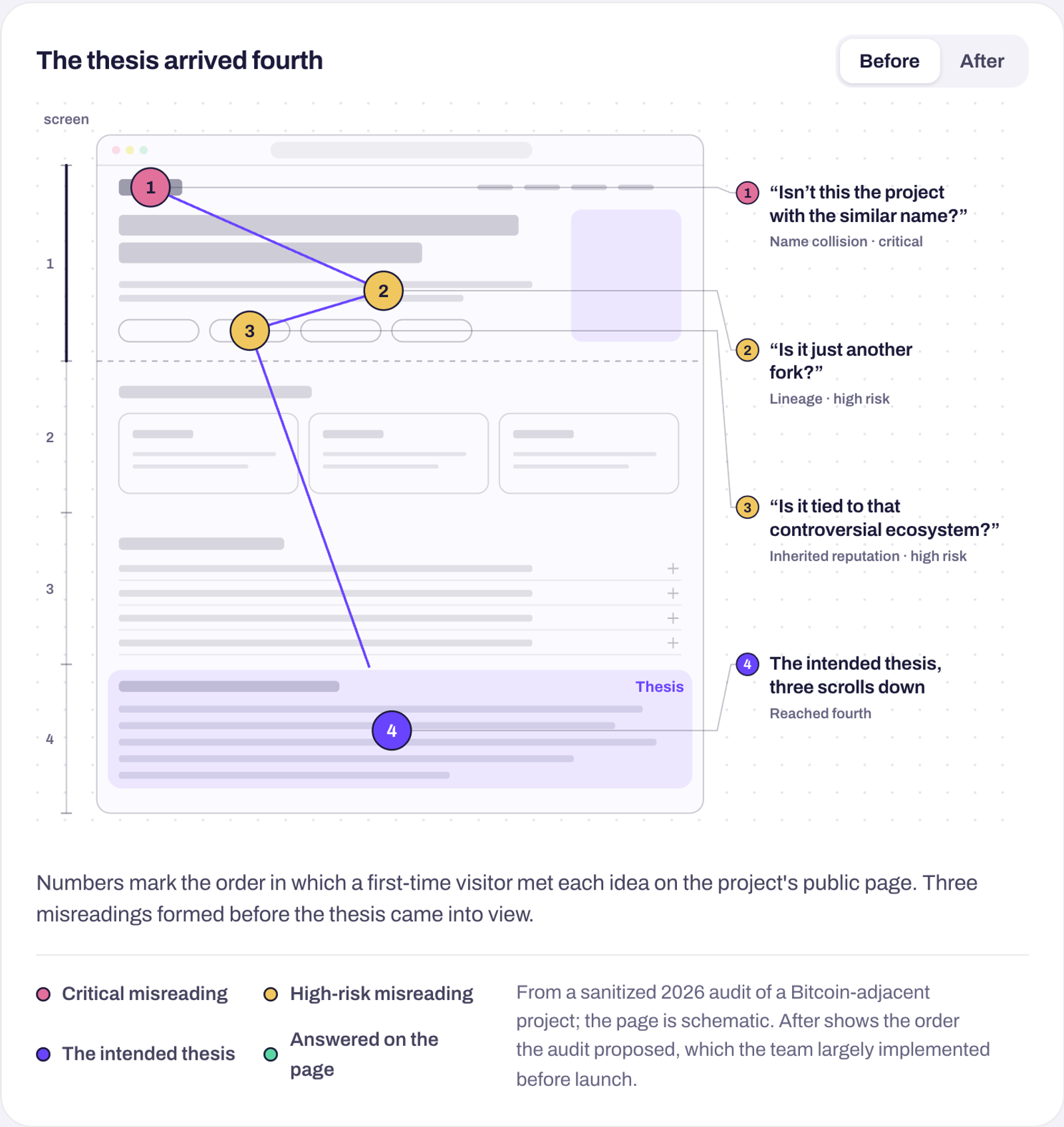
The thesis arrived fourth
Each number marks the order in which a first-time visitor met an idea on the project's public page. Pink and yellow show misreadings by risk, and violet shows the intended thesis. Three misreadings formed before the thesis came into view.
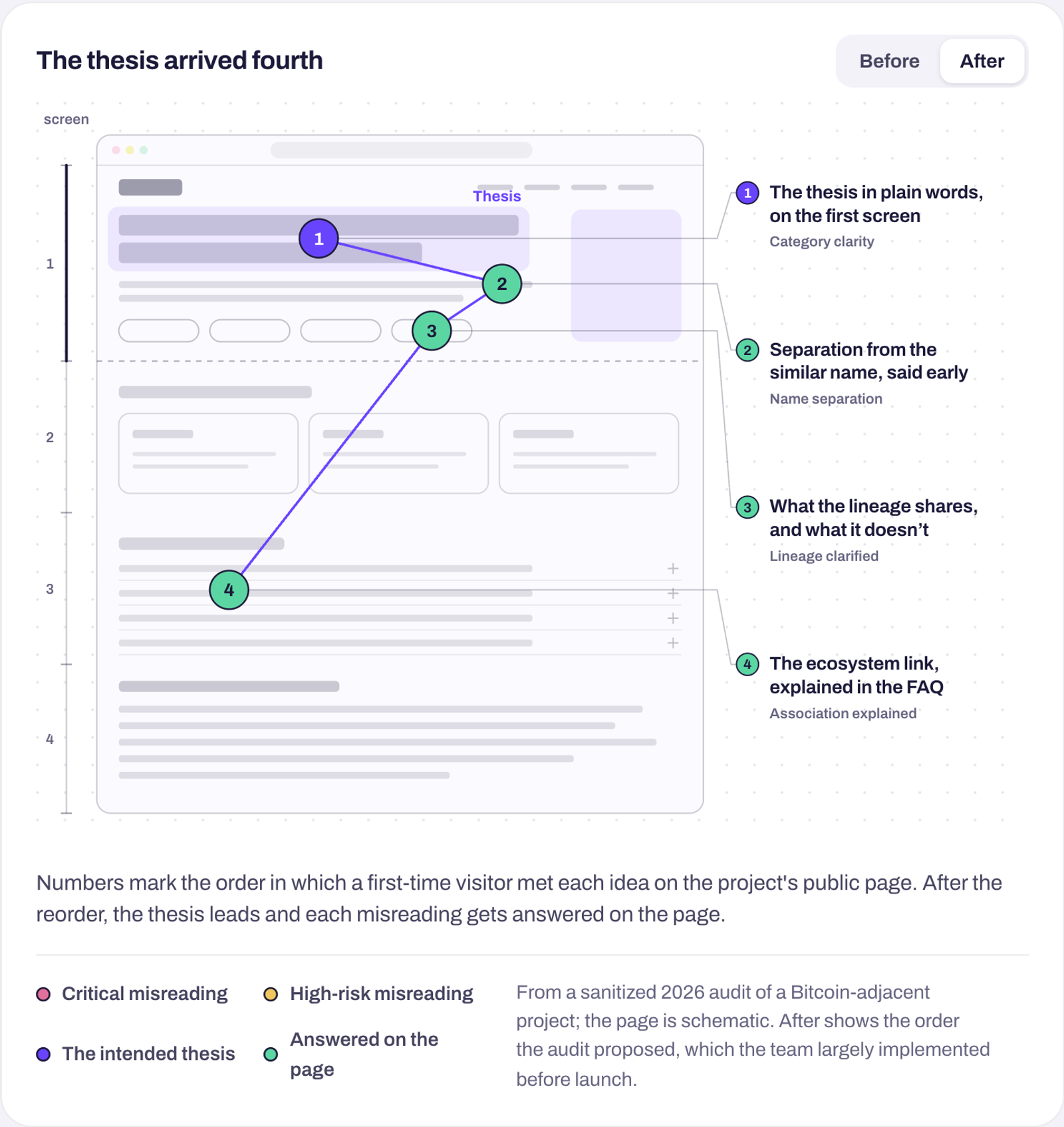
The thesis moved to the first screen
The same page in the order the audit proposed, which the team largely implemented before launch. The thesis leads, and green marks each misreading answered on the page. The figure is schematic, so it shows the structure and keeps the real page private.
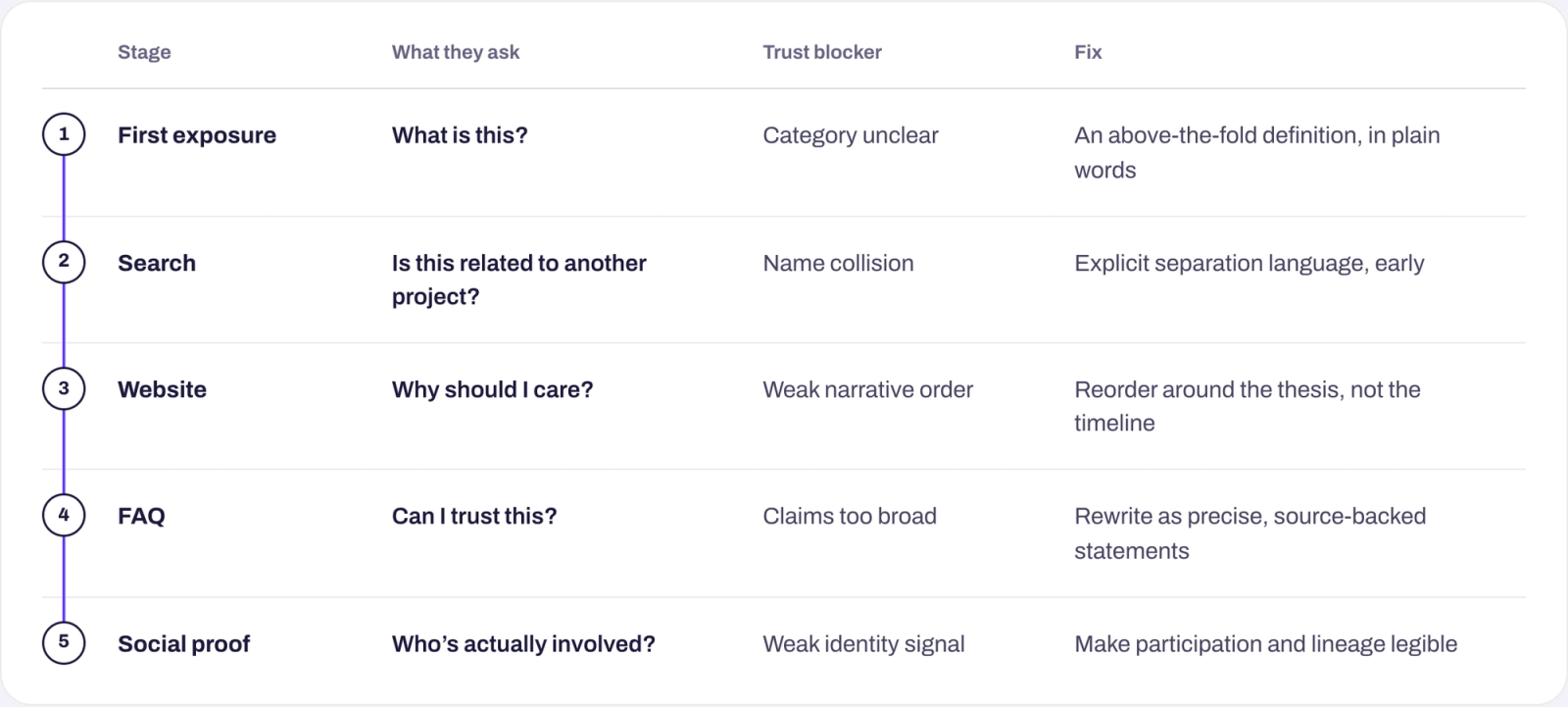
Five questions a doubter asks
A skeptical visitor rarely takes the path a homepage assumes. I rebuilt the real one, and gave each stage its question, its trust blocker and its fix. The project's strongest argument existed, but it sat three scrolls below where a doubter had already decided.
Iteration & Refinement
Ranked by risk
Findings went on a grid of trust impact against fixability, then into four tiers, from fixes needed before wider launch communication to post-launch polish.
What the team implemented
The client acted on a large share of the plan before launch: category clarity, name-separation language, the reordered trust sequence and tighter claims.